What Can Non-Surgical Rhinoplasty Address, and Where are the Limits?
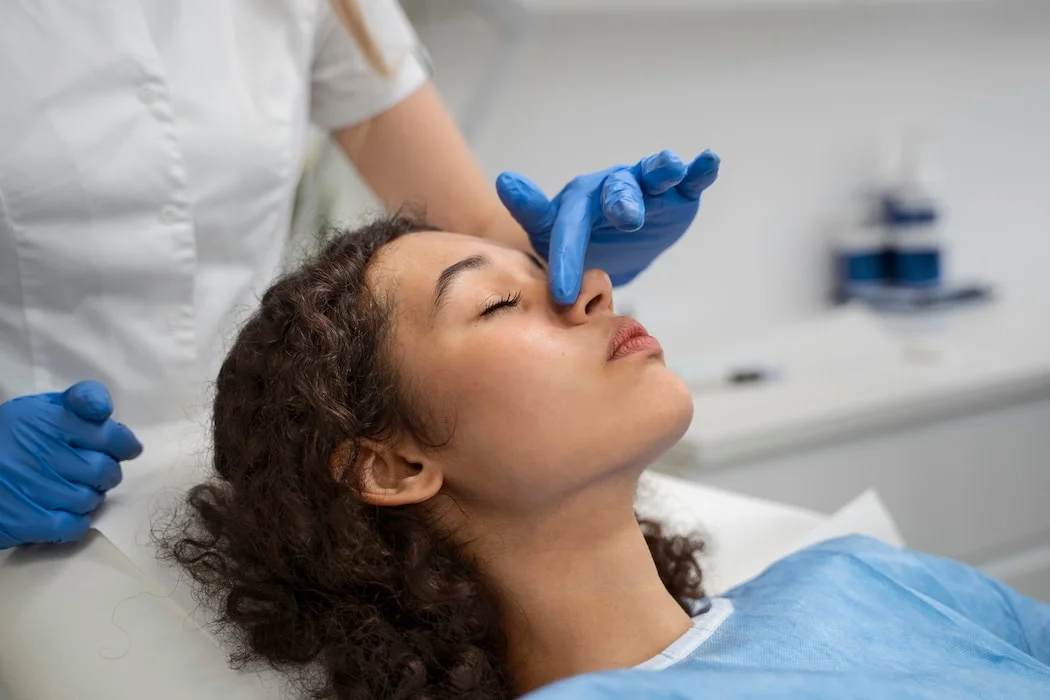
Non-surgical rhinoplasty is a cosmetic procedure that may temporarily alter selected aspects of the nose’s contours and profile without surgery. It may be considered when discussing minor contour irregularities, the appearance of a dorsal hump, or selected forms of asymmetry.
However, it cannot reduce the physical size of the nose, remove nasal tissue, or provide the structural changes associated with surgical rhinoplasty.
Key Points
- Non-surgical rhinoplasty may be considered for selected contour, profile and asymmetry concerns.
- It cannot reduce nasal tissue, provide extensive structural change, address functional concerns or guarantee symmetry.
- Treatment suitability varies between individuals and should be established through consultation, clinical assessment and informed consent.
- All cosmetic procedures carry risks and may not be suitable for everyone.
What exactly is non-surgical rhinoplasty?
Non-surgical rhinoplasty in Sydney involves the careful placement of a prescription-only medicine to temporarily modify certain nasal contours.
It is different from surgical rhinoplasty, which can alter the underlying bone, cartilage and structure of the nose. A non-surgical approach does not involve general anaesthesia or the removal of nasal tissue, but this does not mean it is suitable for every person or every appearance-related concern.
A personalised assessment is important because even relatively subtle changes must be considered in relation to the entire face. Nasal structure, skin characteristics, and profile proportions can all influence what may be appropriate.
Which nasal concerns may be discussed?
1. The appearance of a dorsal hump
During a non-surgical rhinoplasty consultation, an expert may consider whether changes to the surrounding contours could influence how the bridge appears from the side.
The underlying bone or cartilage is not removed. This means non-surgical rhinoplasty does not physically reduce dorsal hump. Its purpose and limitations are different from those of surgery, and the nose may not be suitable for this approach depending on its existing structure and proportions.
2. Minor contour irregularities
Small differences along the bridge or profile may be discussed during consultation. Treatment planning considers how an adjustment to one area could influence the appearance of nearby areas and overall facial balance.
The procedure is not intended to produce extensive structural alteration. What may be appropriate for one person may not be appropriate for another.
3. Potential nasal asymmetry correction
Some asymmetries may be discussed, but complete nasal symmetry cannot be promised. Natural facial features are rarely identical on both sides, and existing anatomy places limits on what non-surgical rhinoplasty may achieve.
4. Profile balance
The nose is not assessed as an isolated feature. Its relationship with the forehead, lips, chin, and broader facial proportions may also be considered.
This whole-face approach helps determine whether a proposed change is consistent with the person’s anatomy and individual treatment goals.
What can non-surgical rhinoplasty not do?
1. It cannot physically reduce nose size
Non-surgical rhinoplasty does not remove bone, cartilage or other nasal tissue. It therefore cannot make the underlying structure smaller.
In selected cases, a change in contour may alter how the profile is perceived. This should not be confused with physical reduction.
2. It cannot provide major structural change
Significant changes to the width, projection or underlying framework of the nose generally fall outside the capabilities of a non-surgical procedure.
A surgical assessment may be more appropriate when a person’s goals require permanent or substantial structural alteration.
3. It cannot address functional concerns
A non-surgical cosmetic procedure does not treat breathing difficulties or change the internal structures responsible for nasal function.
Functional concerns require appropriate medical assessment. Cosmetic suitability should not be assumed to address an underlying functional issue.
4. It cannot guarantee symmetry or a specific outcome
Individual anatomy, skin characteristics, previous procedures, and biological response can influence the outcome. No cosmetic procedure produces an identical result for every person.
The potential outcome, material risks, and limitations should be discussed before a decision is made.
5. It is not permanent
The effects of temporary non-surgical nose reshaping vary between individuals. A specific duration should not be assumed or guaranteed.
Future treatment may not automatically be appropriate simply because an earlier result has changed over time. Suitability should be reassessed where further treatment is being considered.
What determines treatment suitability?
Suitability may be influenced by:
- Nasal anatomy and skin characteristics
- Facial balance and profile proportions
- Previous nasal surgery or cosmetic procedures
- Relevant health and treatment history
- Individual goals and realistic expectations
- The potential risks and limitations
- Whether another option, including no treatment, may be more appropriate
Check out what happens during a non-surgical cosmetic consultation to obtain further information about assessment and informed decision-making.
Consultation at Aesthetics Residence by Masie
A consultation for a non-surgical nose job in Sydney may include discussion of:
- The person’s appearance-related concerns and treatment goals
- Nasal anatomy, skin and facial proportions
- Previous procedures
- Potential treatment options
- Material risks and limitations
- Expected and temporary outcomes
- Aftercare and follow-up considerations
- Reasons treatment may not be recommended
Frequently asked questions
Can non-surgical rhinoplasty make the nose smaller?
No. It does not remove bone, cartilage or other nasal tissue. A temporary contour change may influence how proportions are perceived in selected cases, but it does not physically reduce the nose.
Can it remove a dorsal hump?
It does not physically remove a dorsal hump. Depending on individual anatomy, treatment planning may consider the surrounding contours and how the bridge appears in profile.
Can non-surgical rhinoplasty straighten an asymmetrical nose?
Selected contour differences may be discussed, but the procedure cannot guarantee a straight or completely symmetrical result. Suitability depends on the type and extent of the asymmetry.
Can it address breathing concerns?
No. Non-surgical rhinoplasty is a cosmetic procedure and does not alter the internal nasal structures responsible for breathing. Functional concerns require appropriate medical assessment.
Is everyone suitable for non-surgical rhinoplasty?
No. Suitability depends on anatomy, previous procedures, relevant history, individual goals and realistic expectations. In some cases, another option—or no treatment—may be more appropriate.
Book a Consultation
For further information on non-surgical rhino, book a consultation with our expert. We will assess and explain the suitability of the procedure for your case.